Why Isn't My Brand Showing Up in ChatGPT?
You ask ChatGPT for the best tool in your category, and it names three competitors. Not you. If that stings, good news: it's usually one of a handful of specific, fixable reasons, not bad luck.
Why isn't my brand showing up in ChatGPT?
The short answer: ChatGPT builds its recommendations mostly from what the wider web says about your category, not from your own website. If you're missing from the pages it reads, you're missing from the answer. We break down the mechanics in how ChatGPT recommends brands; below are the four reasons it usually comes down to.
ChatGPT can't actually reach your site
If you block AI crawlers in robots.txt, or your key content only appears after JavaScript runs, then to ChatGPT that content isn't there. It's the most common own-goal. Start with the technical GEO checklist and confirm the answer-driving bots can fetch your pages.
The web doesn't talk about you
This is the big one. ChatGPT leans on Reddit threads, review sites, and "best X" roundups. If your competitors are in those and you aren't, that's the answer it echoes. Fixing it is reputation work (getting into legitimate roundups, keeping reviews alive), covered in the off-site GEO guide.
Your brand isn't a clear entity
If your name is generic or the model can't confidently connect it to your category, you lose recommendations to clearer rivals. A consistent one-line description everywhere your brand appears helps a lot.
You're judging one answer
Ask twice, get different brands: answers are stochastic. One screenshot proves nothing. Track a set of prompts over weeks before you conclude you're invisible; that's what prompt tracking is for.
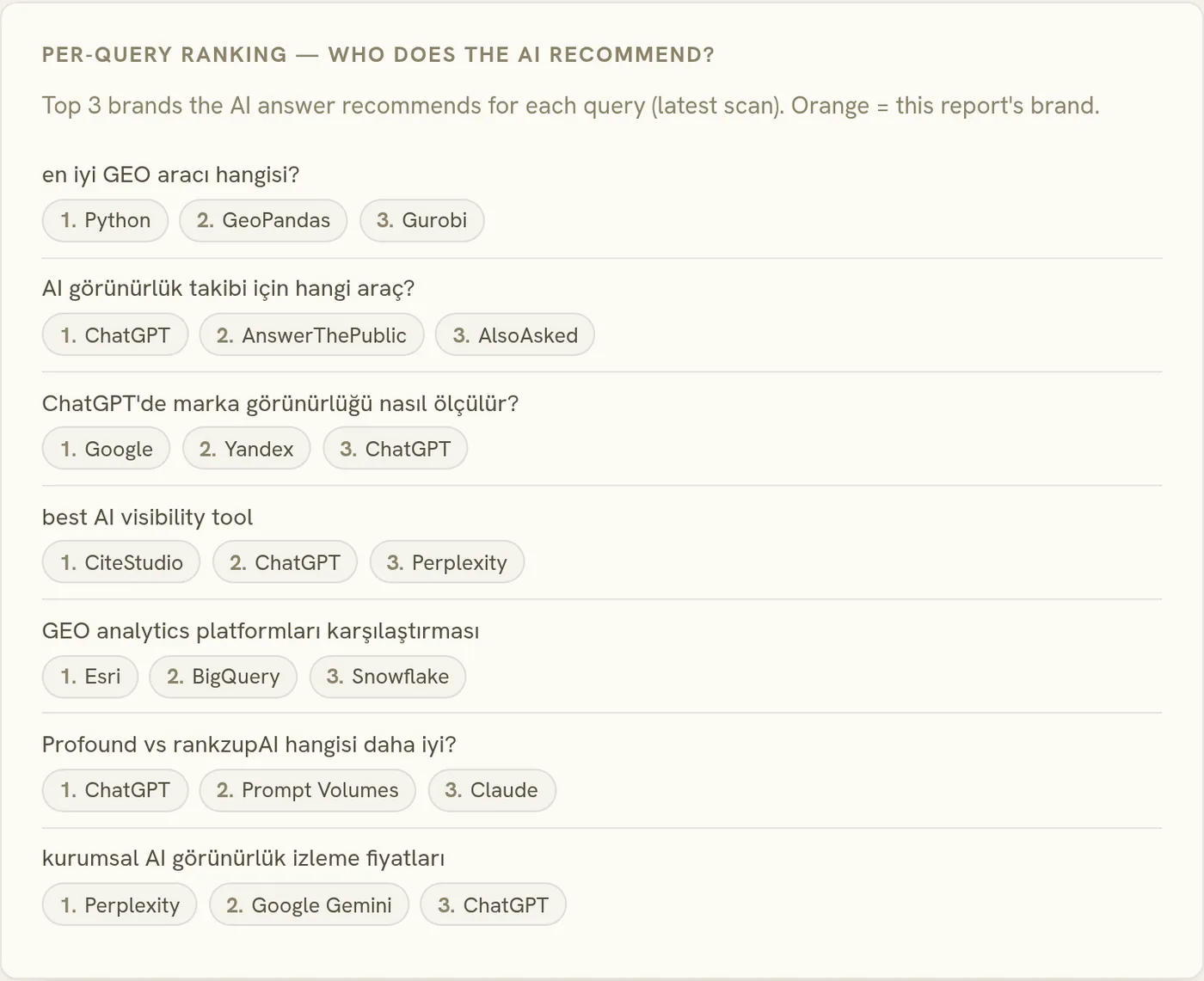
The fastest place to start is knowing where you actually stand. Run a free check or read ChatGPT SEO for the fix list.
A four-question diagnostic
Run these in order; each points at a different fix.
- Can OpenAI's bots reach you? Check robots.txt for GPTBot and OAI-SearchBot, then check your logs for actual visits. Blocked → the fix is one file edit.
- Does the web answer your category questions without you? Search your top three questions classically; if the ranking comparisons and threads skip you, ChatGPT reads the same silence. → Source work.
- Does ChatGPT know who you are when asked directly? If a branded question draws a blank or confusion with a similar name, you have an entity problem, not a content problem.
- Is it every run, or one run? Scan the same questions for two weeks before concluding anything: variance is the default, and half of "we disappeared" reports are one unlucky run.
How long recovery actually takes
In the cases we have watched, access fixes can reflect within days once crawlers return; new source presence (a comparison article, a review surge) typically reaches answers in one to three months; entity corrections are the slowest, often a quarter or more. Anyone promising to get you into ChatGPT next week is describing a mechanism that does not exist.
The five-minute checklist before you panic
Before commissioning anything, check four things in order. Fetch your key page as an AI bot: does the raw HTML carry the content? Read your robots.txt against the current bot list. Ask your category's money question and note who IS cited. That is the source map you are missing from. And repeat the question in a clean session twice, because one answer is not data. Most "we're invisible" cases resolve into one of these four before the afternoon is out.
The other failure mode is being framed wrong
Absence is not the only problem worth diagnosing. Showing up as "a smaller alternative with mixed reviews" while a rival gets "the popular choice" loses the recommendation just as surely. If you do appear, read the framing before celebrating: the sentiment guide covers how framing is measured, and the repair guide what to do when it reads badly.
Diagnosing absence needs a measurement you trust, not a single prompt typed by hand. How AI visibility is measured covers the sampling behind that.