Negative AI Sentiment: How to Repair Your Brand's Image
Someone asked "is X trustworthy" and the engine replied "some users report shipping problems". The first reaction is usually panic; the second is blaming the engine. Neither works. Negative AI sentiment is a finding: the engine read it somewhere, and that somewhere is still out there.
Is it really negative, and how much?
One bad sentence is not a crisis. Answers are probabilistic; the same question may come back softer tomorrow. Before acting, settle three things:
- Spread: Is the negative framing on one engine or all of them? One question or many?
- Persistence: Does it repeat across weekly scans, or was it a one-off?
- Substance: Is the complaint concrete ("slow shipping") or just generic caution?
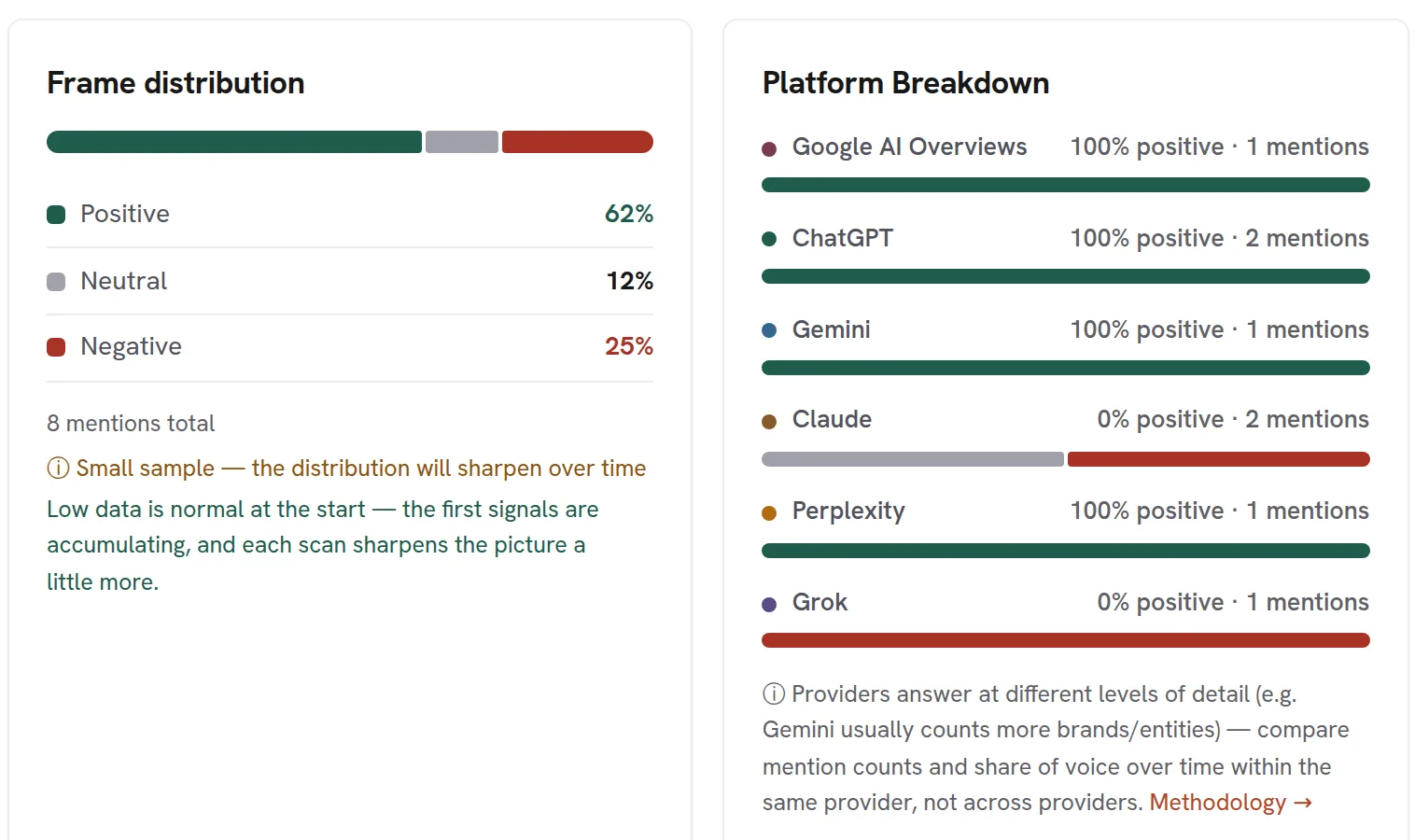
rankzupAI labels the brand framing in every answer as positive, neutral or negative and tracks sentiment weekly, so you decide on a pattern, not a single glimpse. If the engine states something FALSE (a feature you do not have, a wrong price), that is a different problem handled by hallucination tracking. This guide is about negativity with a real source.
Where did the engine read this?
Behind nearly every negative frame sits a traceable source. Check the answer's citations and your category's source map: a complaint-platform page, a dictionary or forum thread trending sour, an old negative review, a low-rated marketplace page. For Turkish answers we mapped this ecosystem in the sources post.
Once found, check the complaint's age. Engines have a painful habit: even when the problem is long fixed, if the old conversation is still the most visible record, the engine keeps telling the old story.
Real work on three fronts
1. The problem itself. If the complaint is concrete and fair, fix the operation first. No content strategy permanently deletes "slow shipping" while shipping stays slow; an unresolved problem keeps rewriting its own trace.
2. The record at the source. Make resolved cases visibly resolved on complaint platforms; answer threads in a corporate, honest, non-defensive voice. The goal is not to erase the conversation but to make the current truth the most visible record.
3. Fresh, strong signals. Engines weigh recency. New, genuine positive experiences (current reviews on the platforms engines actually read, satisfied-customer voices, updated comparison listings) gradually outweigh the old negative record. This is not buying praise; it is making happy customers audible.
When does change show?
After the source improves, answers can take weeks to turn; engines refresh at different speeds. Weekly sentiment tracking is what makes this bearable: you watch the framing drift from negative to neutral to positive on a chart. If nothing moves, you misdiagnosed the source: the loop restarts, but now with data instead of guesses.
When the negativity is factual
The hardest case deserves its own answer: the engine says something negative and it is true: a real incident, a genuine complaint pattern. Suppression is not on the menu; engines re-read sources indefinitely. What works is changing the weight of the story: fix the underlying issue visibly, respond publicly where the complaints live, and build enough recent positive material that the old story becomes one chapter instead of the summary. Engines compress; give them more to compress.
Prevention is the cheap insurance
Every repair in this guide costs more than the same work done before a crisis. A standing sentiment watch (the same questions, scanned on schedule, with an alert on the negative share) turns a future repair project into a Tuesday fix, because you catch the complaint thread at three mentions instead of three hundred. Hallucination and claim tracking pairs the sentiment trend with the specific claims engines make, which is exactly the early-warning setup.
Curious how engines frame you today? Start with the free test; the perception screen shows each engine's actual sentences about your brand.
Sentiment moves with the same variance as any other signal, so check whether a shift is a real change or noise before you act on it.