The Sources Feeding Turkish AI Answers: A Field Map
English GEO guides repeat the same source list: Reddit, Wikipedia, G2, big tech media. For Turkish questions that list simply does not apply: engines build their Turkish answers from a different ecosystem. Here is the real map, drawn from thousands of scans.
Comparison and review sites are the quiet kings
For Turkish commercial questions, the most-cited source type is the category-specific comparison site: supplement comparison sites, cosmetics review blogs, software lists. Most brands do not even have these sites on their radar; yet engines assemble their "best X" answers largely from these lists. In our measurements, a single comparison site fed more than half of the answers in one category.
The practical takeaway: identify the two or three most-cited comparison sites in your category and get listed there with accurate information. In most categories this is the single highest-return move available.
Ekşi Sözlük and forums form the trust layer
For "is it trustworthy" questions, engines turn to community voices: Ekşi Sözlük threads, DonanımHaber and category forums, complaint platforms. The mood of a brand's dictionary thread leaks into the framing the engine uses: a positive thread earns "users are satisfied", a negative one earns cautious language.
The game here is not astroturfing; fake praise gets filtered out by both the community and the engines. The game is fixing real problems so real experiences get written. If a negative thread exists, resolve it at the source instead of ignoring it: engines follow the current conversation, and recovery shows up in answers. We wrote a step-by-step version of this in the negative sentiment repair guide.
The Trendyol and Hepsiburada effect
For product questions, marketplace pages are strong sources: high-review product pages send engines both popularity and price signals. A product weak on your own site can still enter answers through a well-built marketplace presence, and the reverse holds too.
News and content sites depend on category
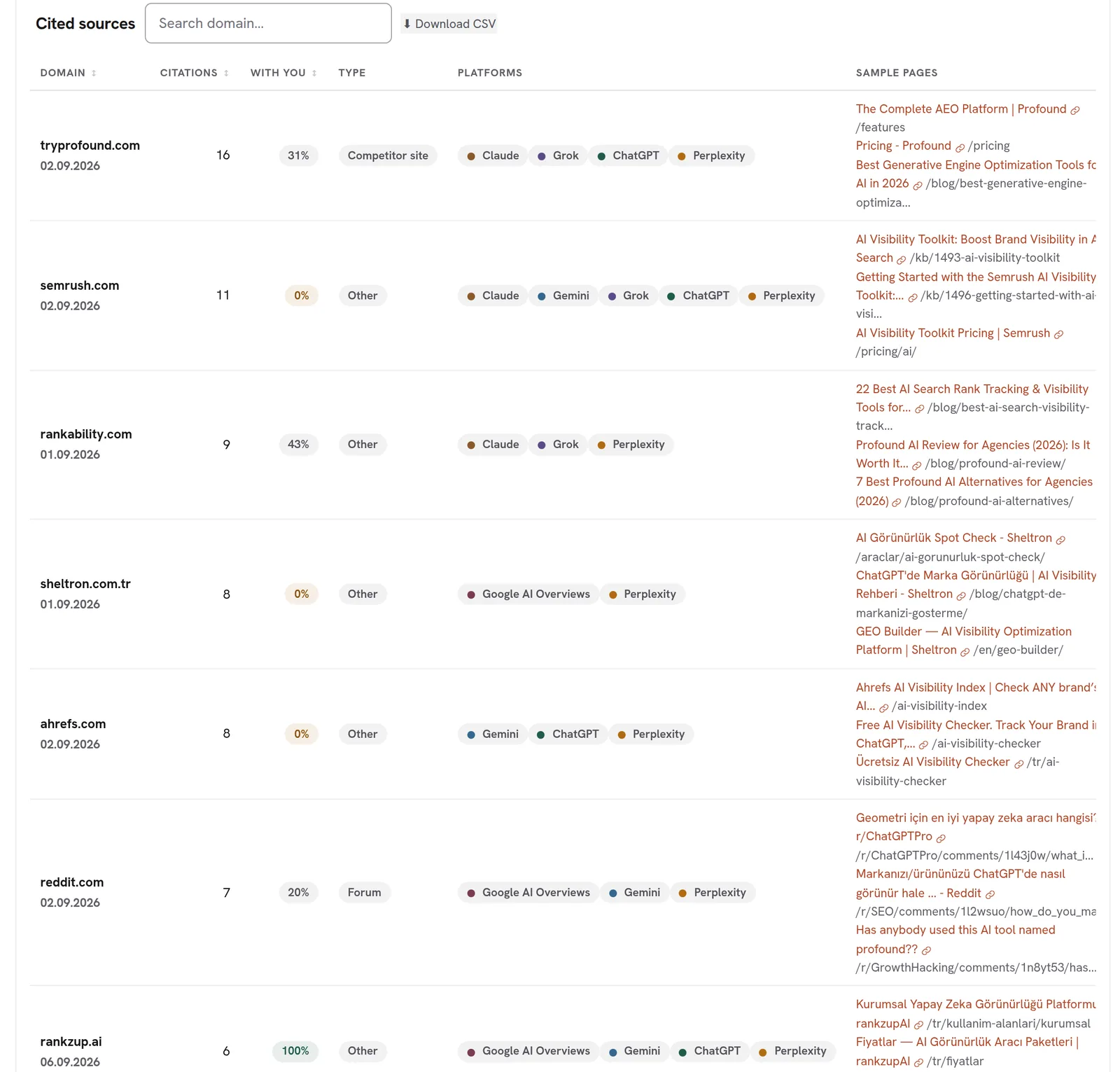
Editorial weight varies by category. In finance and health, trusted news sites dominate; in lifestyle categories, listicle publishers lead. Do not guess your category's real mix; measure it with source analysis: the panel counts every cited domain across your questions and classifies each by type.
Your own site is necessary but not sufficient
Engines read your site too. They just refuse to rely on it alone. The clear pattern in our data: brands that win category questions have BOTH strong guide content of their own AND presence on third-party sources. Missing either leaves visibility limping. You can check how readable your site is to AI crawlers with the free GEO audit in two minutes.
One layer the map above skips deserves a note: Turkish Wikipedia and Wikidata. Both are thinner than their English counterparts, which cuts both ways: notability bars are real, but a clean Wikidata record is attainable for most established brands and quietly helps models separate you from similarly named companies. It will not put you in a "best X" answer; it keeps you from being mis-merged once you get there.
Draw the Turkish source map for your own brand
The patterns here are averages over thousands of scans; your category's map comes from your own questions. rankzupAI lists the sources behind every answer, ranks domains by frequency and classifies them by type, so you point your content and PR budget with real citation data, not guesses.
How to earn each source type
The map is only useful with entry routes. Comparison and review sites: most accept vendor submissions or respond to outreach. Being absent is often just never having asked. Ekşi Sözlük and forums: astroturfing backfires and gets archived forever; the workable route is genuinely resolving the complaints already there, visibly. Marketplaces: review volume compounds. The operational fix is post-purchase review flows, not one campaign. News and content sites: digital PR with actual data beats press releases about funding. In every case the test is the same: does the engine cite this source for your questions? Your scans answer that before you spend a lira.