Digital PR for AI Answers: Earning Mentions Models Read
Why digital PR for AI is a different job
Traditional digital PR had one currency: the link. You pitched a story, a journalist covered it, the coverage carried a backlink, and the backlink moved your domain authority. Whether anyone actually read the article was, if we're honest, beside the point.
Digital PR for AI answers keeps the outreach muscle and throws out the scoreboard. When ChatGPT or Perplexity assembles an answer about your category, it doesn't tally your backlinks. It reads pages (retrieved live or absorbed during training) and synthesizes what they say about you. A mention with no link on a page a model actually reads can do more for your AI visibility than a followed link on a page it never sees. That inversion breaks most PR playbooks, because agencies still report the metrics the old game rewarded: domain rating of the linking site, number of placements, estimated "link value."
The new questions are blunter. Will a model ever read this page? Does the page say something about us worth repeating? And does it appear in the sources engines cite when they answer the questions our buyers ask? That last one is checkable: it's the core of AI citation analysis, and it should sit underneath every PR decision you make from here on.
None of this means links stopped mattering. They still drive rankings, and rankings feed the retrieval layer of search-enabled AI answers. The point is that links became one signal among several rather than the whole game, and the placements that win links and the placements that win AI mentions are not always the same placements.
Which placements actually enter AI answers
Here's the uncomfortable filter: a placement can only influence AI answers if a model can read it. That single test disqualifies more "prestige" PR than most teams expect.
Indexed and crawlable beats paywalled and prestigious. A feature in a major national paper is wonderful for humans. But many large news publishers paywall their content, and a good number explicitly block AI crawlers in robots.txt. You can check any outlet's robots.txt yourself in ten seconds before you pitch it. If GPTBot and friends can't fetch the page, and the paywall hides the text from whatever does fetch it, your beautiful feature contributes little to the written record models draw on. I've seen teams celebrate a tier-one hit that no engine will ever quote, while a mid-tier trade blog mention (fully open, cleanly indexed) shows up in citations within weeks.
Topical outlets beat general-interest ones. When an engine answers "best warehouse management software," it retrieves pages about warehouse management software. A supply-chain trade publication that covers your category constantly is exactly the kind of source that surfaces for those queries. A lifestyle magazine with triple the audience isn't, because it never ranks for, and is never retrieved for, your category's questions. Relevance decides retrieval; audience size doesn't.
Pages that name you in a useful context beat pages that merely link you. A mention like "for cold storage operations, [Brand] is the tool practitioners keep recommending" gives a model a claim it can reuse. A logo in a sponsor bar gives it nothing. When you review a draft placement, read your mention and ask: if a model quoted this sentence verbatim, would it help us? If the answer is no, negotiate the wording, not the link.
The practical move is to rebuild your target-outlet list around these three tests. Run citation analysis for your category first, see which domains engines already lean on, and pitch those. It feels less glamorous than chasing marquee mastheads. It works better.
Data-led pitches win with journalists and models alike
The pitch that earns these placements has changed too, and in a direction that happens to favor smaller companies: original data beats company news, almost every time.
Journalists at topical outlets are drowning in "we raised a round" and "we shipped a feature" emails. What they can't get enough of is a defensible number nobody else has. If you operate a product, you're sitting on aggregate data about your corner of the industry: anonymized usage patterns, category benchmarks, survey results from your user base. Package one finding, make the methodology transparent, and you've given a writer a story they couldn't write without you.
The AI-visibility payoff is double. First, data stories earn coverage across multiple outlets, and each piece names you as the source. That's the corroboration pattern models reward, several independent pages attributing the same fact to the same brand. Second, the statistic itself becomes quotable infrastructure. Models reach for concrete numbers when they compose answers, and a widely repeated stat drags its source's name along with it. Your finding gets absorbed into the written record of your category with your brand attached.
A made-up example to show the shape: imagine "Freightlens," a fictional freight-analytics startup. Instead of pitching its Series A, it publishes a quarterly report on average port dwell times drawn from anonymized customer data, with the methodology spelled out. Three logistics trade publications cover the findings; each names Freightlens as the source. Months later, when someone asks an AI engine about port congestion trends, the pages available to retrieve include three independent articles attributing the same numbers to Freightlens, and the brand starts appearing in answers about a topic it wants to own. No fabricated claims, no link-begging, just a fact worth repeating with a name attached to it.
One warning that should be obvious but apparently isn't: the data has to be real and the methodology has to survive scrutiny. A debunked stat propagates exactly as efficiently as a good one, with your name attached exactly as firmly.
Why one Reddit thread can beat a press release
This is the part of digital PR for AI that traditional agencies resist hardest, so let's make the case plainly.
A press release lives on a wire service and a corporate newsroom page, written in a dialect every reader (human or machine) has learned to discount. It says what you claim about yourself, and self-description is precisely the signal models appear to weight least when recommending brands.
A Reddit thread where practitioners discuss your product is the opposite object. It's independent, it's specific, it's argumentative, and it lives on a platform whose licensing deals with major AI labs have made its content a documented part of what these systems train on. Reddit threads also rank remarkably well in the web search that feeds retrieval. When an engine handles "is [category] tool X actually good," a candid thread with real users weighing pros and cons is exactly the kind of page it finds and quotes. Ask the engines questions in your own category and watch how often reddit.com shows up in the citations. That's not a talking point, it's an observation you can reproduce this afternoon.
The PR implication is not "go astroturf Reddit": that fails, publicly and memorably, and manufactured threads are against both the platform's rules and your own interests. The implication is that earned community discussion belongs in your PR strategy as a first-class outcome, on equal footing with press. Give communities something worth discussing: the data report above, a genuinely useful free tool, a founder doing a candid AMA. You can't control the thread, and that's exactly why it counts.
This is one slice of the broader case for off-site GEO: the mention ecosystem is bigger than press, and community discussion is its highest-trust tier.
Measuring PR by AI citations, not just links
If placements are the input, what's the output metric? The old answer (links acquired, DR of linking domains) measures effort, not effect. The new answer is citations and mentions in actual AI answers.
The loop looks like this. Define the 20-30 questions that matter for your business: category queries, comparison queries, "best X for Y" phrasings your buyers use. Run them across the engines you care about on a schedule, and log two things: whether you're mentioned in the answer, and which URLs get cited. Before a PR push, this gives you a baseline and a target list (the domains engines already cite are the outlets worth pitching). After a push, it tells you whether the placements you earned are entering answers. Is the article you placed showing up as a citation? Did your mention rate move in the quarter after coverage landed?
Be honest about attribution, though: it's fuzzy, and anyone who tells you otherwise is selling something. Engines vary answers run to run, models update, and a mention-rate change rarely traces to a single placement. What you get isn't clean campaign ROI; it's directional evidence, accumulated over months: this cluster of placements preceded this shift in citations. That's still far more truthful than a links-acquired report, because it measures the thing you actually wanted: presence in the answers your buyers see. Track it systematically and the fuzziness averages out; our AI citation analysis guide covers the full workflow.
A reasonable scorecard for a modern PR program: mention rate across your query set, citation appearances for placed pages, share of answers naming you versus competitors, and (still, unashamedly) links, because rankings feed retrieval. Links didn't stop mattering. They just stopped being the point.
AI tool directories as backlink sources
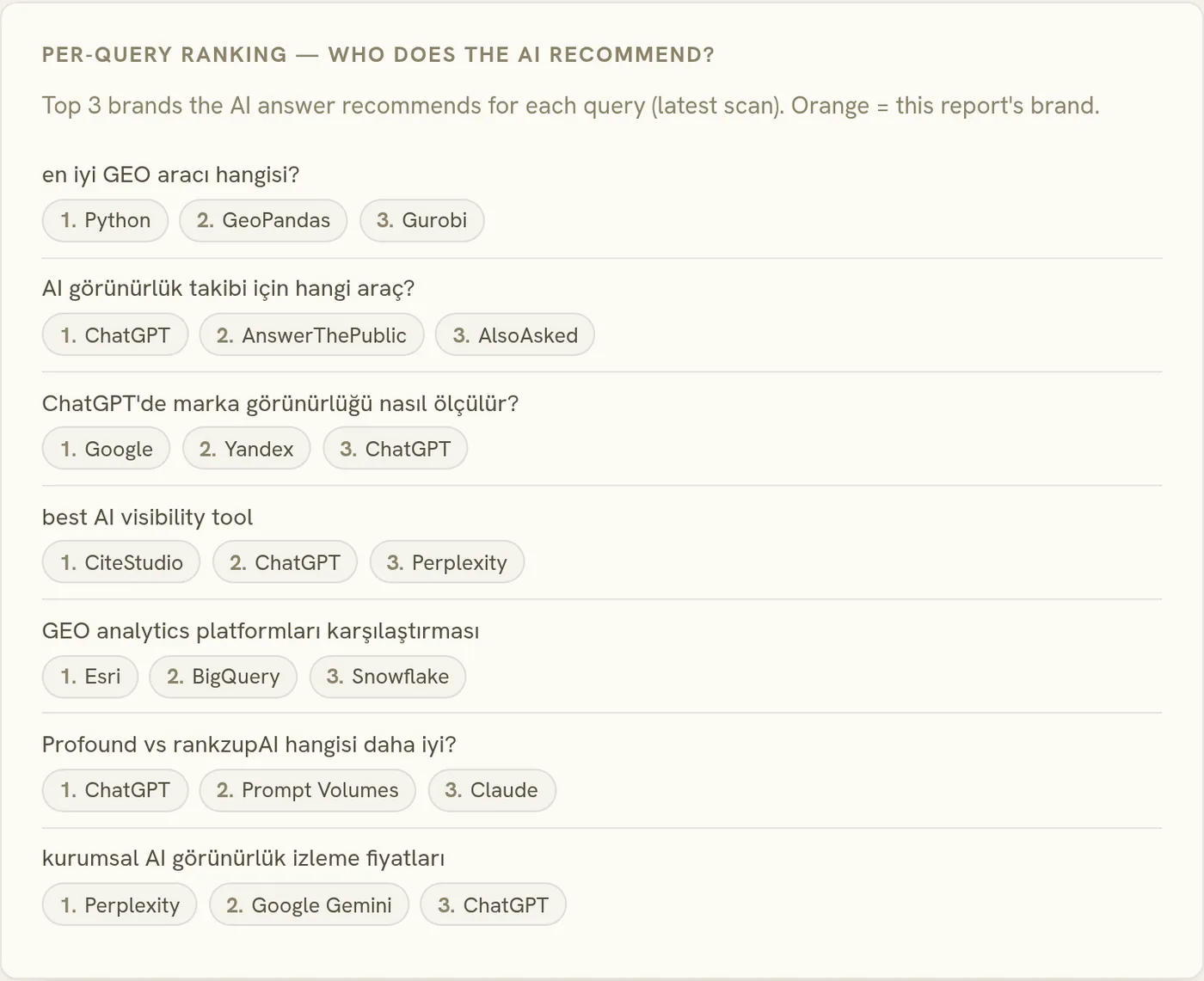
A quieter channel worth a place in the plan: curated directories and tool lists. Engines answering "best X tools" questions read exactly these pages, so one listing does double duty: a backlink for classic SEO and a citation source for AI answers. Two rules keep it honest. First, pick directories that engines actually cite for your questions (the panel's source analysis shows which ones earn citations, and most do not). Second, treat a directory listing as a starting point, not a strategy; a handful of well-chosen listings beats fifty generic ones, and none of them substitute for reviews and comparisons written by real users.
Where to start this quarter
Don't boil the ocean. Run citation analysis on your core queries and pull the ten domains your engines cite most: that's your pitch list, and it will surprise you. Check robots.txt and paywall status before pitching anything. Find one dataset you already own that could support a small, honest data story, and pitch it to three topical outlets on the list. Give your community something real to talk about. Then re-run the same queries next quarter and see what moved.
It's slower than buying links ever was, and less certain. It's also the only version of PR that compounds in the place your next customer is actually asking.
A citation campaign is one of the few moments worth measuring more often than weekly, because you have a date and a hypothesis to test.