Generative Engine Optimization Best Practices (2026)
Generative engine optimization has accumulated plenty of advice and not much verification. This guide keeps only the practices whose effect we can see in measured visibility data (ours and our users'), plus the mistakes we see most often and a realistic sequence for the first ninety days.
Answer the question before you decorate it
The single highest-leverage habit on your own site: put the direct answer in the first two sentences of the page, then elaborate. Engines assemble answers from fragments, and fragments that already look like answers win.
What this changes in practice:
- Openings. "Choosing a CRM is a complex decision in this fast-moving era" wastes the most valuable sentence on the page. "X costs from $19/month and suits teams under 50 people" gets quoted.
- Headings. A heading that states the claim ("GEO differs from SEO in its target") beats a teaser ("The surprising truth about GEO"). Headings are retrieval signposts, not marketing copy.
- Facts. Numbers, dates and named comparisons near the top of the page, not the bottom. Engines weigh position inside the document.
The full craft is in writing for AI extraction; chunk optimization covers the structural side: how heading hierarchy and paragraph boundaries decide what can be lifted cleanly.
Open the door before optimizing the room
None of the content work matters if engines cannot read the site. The mechanical layer (what we call AI searchability) is quick to verify and quick to fix:
- AI crawlers explicitly allowed in robots.txt (GPTBot, OAI-SearchBot, ClaudeBot, PerplexityBot, Google-Extended)
- Content present in the initial HTML, not conjured by JavaScript
- A sitemap that reflects reality, and correct canonical tags
- Bot protection that does not challenge legitimate AI agents
The technical GEO checklist is the developer-ready version; a free GEO audit checks the whole layer in about ten seconds. Do this once, properly, and revisit quarterly. It is hygiene, not a growth channel.
Work the sources, not just the site
Most of your AI visibility is decided on pages you do not own: reviews, comparison articles, forums, directories. In our measurements, the brands that dominate commercial answers are almost always the ones present in the handful of sources engines actually read for those questions.
The practical sequence:
- Measure which domains engines cite for your questions (the panel's source analysis builds this list per question).
- Sort those sources by citation frequency. The head is usually short: a few comparison sites, one or two forums, a review platform.
- Strengthen your presence exactly there: get into the comparison, earn the reviews, answer in the thread. Skip the platforms engines ignore, whatever their domain authority says.
Off-site GEO maps this layer in depth; digital PR for AI answers covers earning mentions, and the listicle guide handles the "best of" articles engines love to quote.
Tune per engine, but measure first
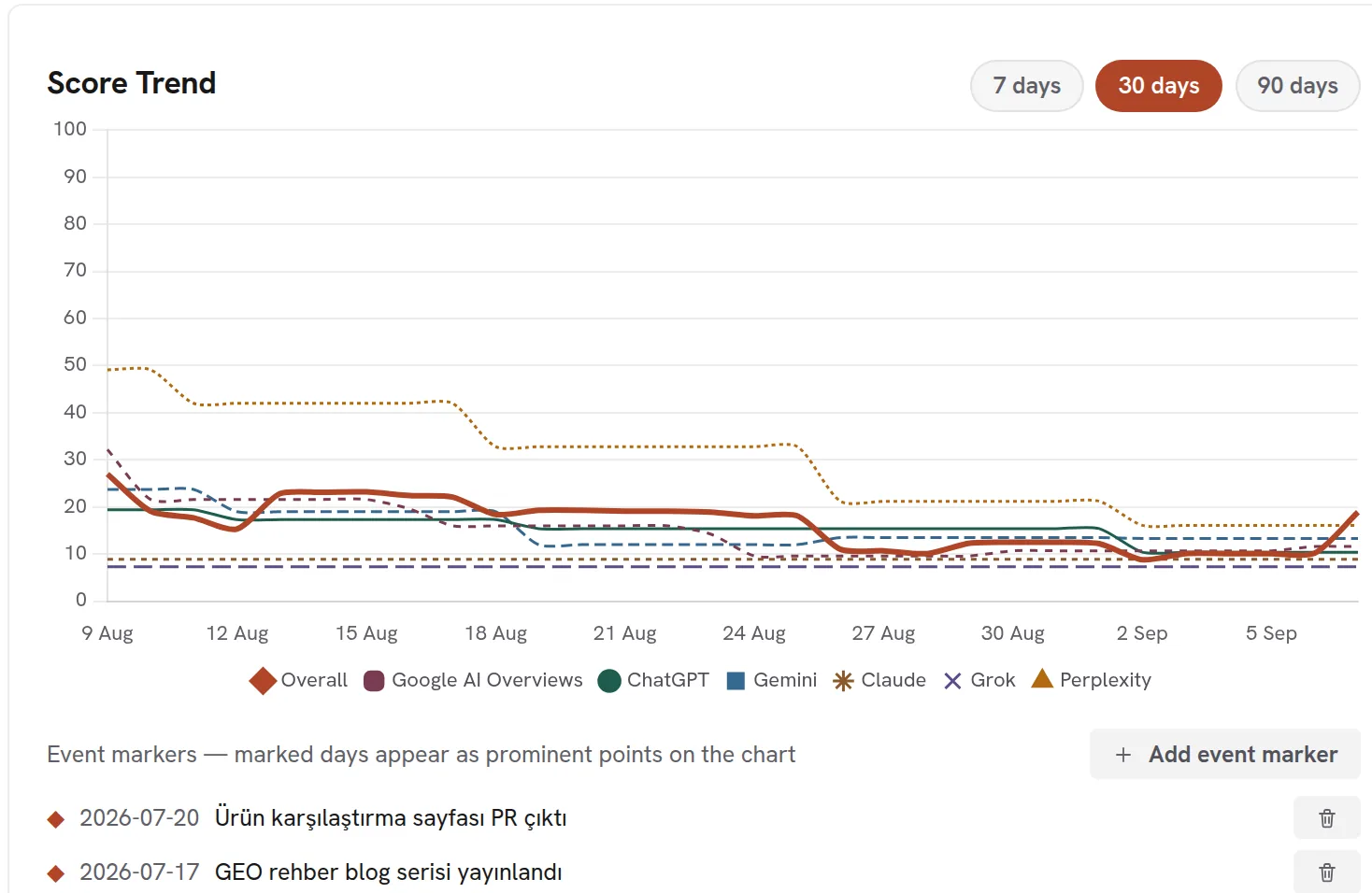
Engines differ enough that one plan fits none perfectly: Perplexity rewards fresh, citable pages and links out generously; Gemini leans on classic Google signals; ChatGPT weighs reviews and forums heavily and cites only in sourced mode; appear in AI Overviews triggers on some queries and not others. Rather than guessing from articles like this one, read your own per-engine numbers and fix the biggest gap first:
The mistakes we see most often
- Optimizing the site while ignoring sources. The most common one. Your pages are one voice among many; for commercial questions, often the quietest.
- Reacting to single answers. One bad answer is noise. A trend over thirty runs is signal. Teams that chase individual screenshots burn effort and morale.
- Chasing every platform equally. Presence on twelve directories that engines never cite is worth less than one comparison article they always cite.
- Measuring with branded questions. "Is X good?" inflates your numbers. The honest baseline uses brand-free questions.
- Treating llms.txt as a strategy. It costs nothing and helps agents that read it, but no major engine currently fetches it. Foundation first, polish later.
A realistic first ninety days
Days 1-15: baseline. Build a question set that ends in money (the design guide), run it across engines, run the technical audit. Fix access issues immediately: they are cheap and blocking.
Days 16-45: structure and sources. Rewrite the openings of your ten most important pages answer-first. Pull the source list from your scans and pick the three sources that matter; start the outreach or review work there.
Days 46-90: iterate on evidence. By now the trend lines mean something. Double down where mentions moved, drop what did nothing, and set up alerts so regressions find you instead of the other way around. The measurement playbook builds the reporting layer; sector-specific adjustments live in the industry playbooks.
Every practice above is a hypothesis until measured against your own data. Start measuring before you start optimizing, and the practices stop being folklore.