Shopify AI Search: Get Your Store Recommended by ChatGPT
How ChatGPT and friends answer shopping questions
When someone asks ChatGPT "what's a good weighted blanket that doesn't sleep hot," the answer isn't pulled from some secret product database. It's assembled from a few predictable ingredients: the model's training data (which brands it already "knows"), live web retrieval through search indexes, product feeds where integrations exist, and (this is the part store owners underestimate) a heavy dose of third-party pages like review roundups, Reddit threads, and buying guides.
The engines differ in ways that matter. ChatGPT's shopping results lean on web data and product feeds, and since OpenAI's partnership with Shopify, merchants can even surface with in-chat checkout. Google's AI Overviews sit directly on top of the Shopping Graph, so your Merchant Center feed is doing real work there. Perplexity runs its own merchant program and shows product cards with citations. Gemini draws from Google's ecosystem. Four engines, four ingredient lists, but the overlap is large enough that one sane strategy covers them all.
One deflating truth first: for head queries like "best running shoes," small stores are mostly fighting for scraps against brands with thousands of mentions in training data. The realistic wins are in the specific stuff ("running shoes for wide feet and flat arches under $120"), where the engines have to actually retrieve and reason rather than recite the obvious names. Specificity is the small store's home turf. Play there.
Your Shopify product data is the foundation
Assistants can only recommend what they can parse. Before anything clever, get the mechanical layer right.
Shopify themes ship with basic JSON-LD product markup, but "basic" is the operative word. Check that every product page exposes complete schema.org Product data:
nameanddescriptionpricewithpriceCurrencyavailabilitygtinormpnwhere they existaggregateRatingfrom real reviews Apps can fill gaps, or a competent theme edit does it. Then check robots.txt and any bot-protection layer for the AI crawlers (OAI-SearchBot, PerplexityBot, Google-Extended), because some firewall configurations block them silently and you'd never know.
Product descriptions deserve a rewrite pass with a new question in mind: does this text answer the questions a shopper would ask an assistant? "Premium quality, stylish design" gives a model nothing to match against "sleeps hot." Actual materials, dimensions, weight, care instructions, what it's compatible with, who it's not for: that's retrievable substance. I've come to think of each product page as a FAQ wearing a product page costume.
And keep your Merchant Center feed clean even if you barely think about Google Shopping ads. AI Overviews pull product info straight from that feed, so wrong prices or stale availability there becomes wrong answers about you in front of shoppers.
AI search pulls in reviews more than you think
Recommendation questions are opinion questions, and models go looking for opinions. That means review content (on your site, on Trustpilot or Judge.me widgets, on Reddit, in YouTube transcripts) feeds directly into whether and how you get recommended.
Two practical consequences. First, review volume and recency on your own product pages matter, and the review text matters more than the star number: a review saying "held up through two winters of daily dog walks" is exactly the kind of sentence that surfaces for "durable dog gear." Ask for reviews systematically; post-delivery email flows still work. Second, watch what's said about you in places you don't control. If the top Reddit thread about your niche calls your bestseller overpriced, that critique can echo through AI answers for months. You can't delete it, but you can respond honestly in-thread and give the model newer, better material to weigh.
Aggregators and listicles do the heavy lifting
Here's the uncomfortable part for anyone hoping to win from their own domain alone. When assistants answer "best X" questions, they lean hard on existing comparison content: niche blog roundups, magazine buying guides, "7 best" listicles. The engines treat these as pre-digested consensus, and they cite them constantly.
So the outreach playbook matters again: identify which roundups get cited for your category (ask the engines yourself and note the sources), then earn your way in. Pitch the smaller niche bloggers, offer samples, be genuinely reviewable. This is old-fashioned PR work with a new scoreboard, and for recommendation queries it routinely beats another month of on-site tweaks.
What a small Shopify store can realistically do
Let me make this concrete with a hypothetical. Say you run a Shopify store selling escape-proof dog harnesses: 60 products, no marketing team, evenings-and-weekends operation. A realistic sequence:
- Week 1: Baseline. Ask ChatGPT, Perplexity, and Google shopping-style questions in your niche ("harness for a dog that backs out of harnesses") several times each. Note who gets named and which sources get cited. It's crude but it beats guessing. The systematic version of this sampling is what our scoring methodology describes.
- Weeks 2-3: Mechanical fixes. Full product schema, crawler access verified, Merchant Center feed cleaned, descriptions rewritten around real shopper questions: escape-proofing mechanics, sizing between breeds, washing.
- Month 2: One deep content piece answering the niche's hardest question (say, a genuinely useful guide to harness escape behavior), because that's citation bait for problem-phase queries.
- Months 2-4: Reviews flowing via post-purchase emails, and outreach to the five dog-gear roundups that kept appearing in your baseline citations.
In this hypothetical, our harness store shouldn't expect to appear for "best dog harness": that belongs to the big names for now. But "harness for a husky that escapes everything" is winnable, and the shopper asking an assistant something that specific is about as close to purchase as traffic gets. That's the honest trade AI search offers small stores: fewer visitors than the old search game, dramatically better intent.
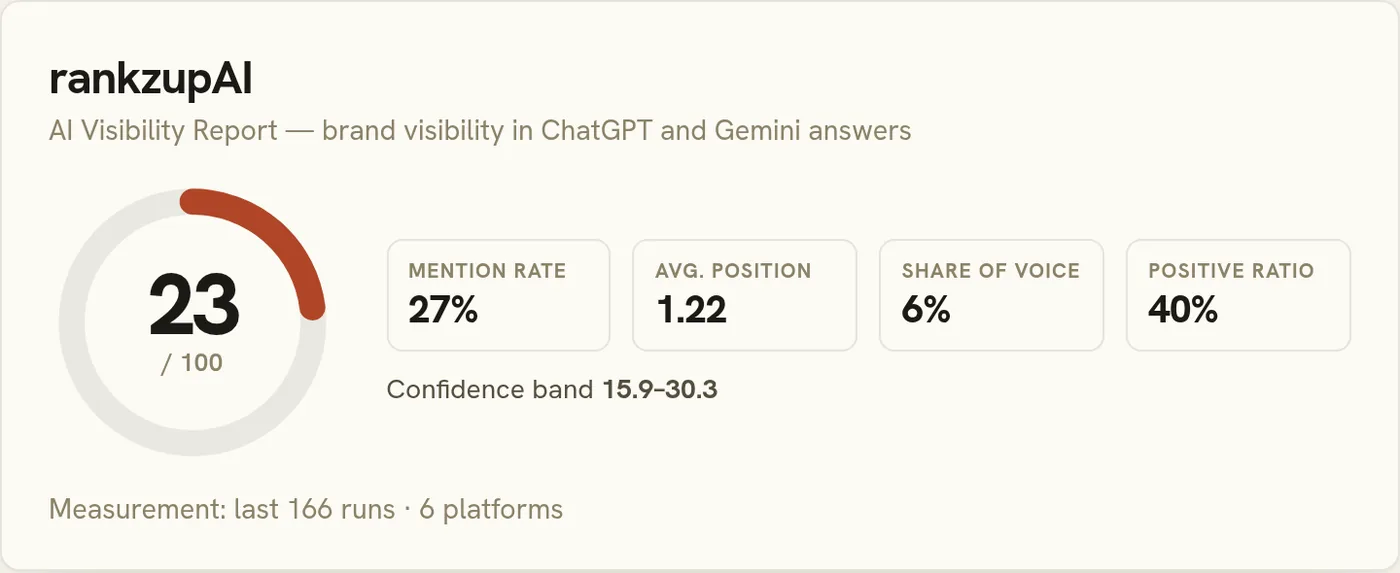
None of this is fast, and I'd distrust anyone who promises ChatGPT recommendations in thirty days. What you can verify quickly is whether any of it is starting to work: AI referral traffic shows up in your analytics with its own signatures, and a free AI referral check will show you whether assistants are already sending shoppers your way.